MetaTrader 5 vs TradingView: A Detailed Comparison Review
Selecting the right trading platform is a critical choice for any trader. The decision impacts everything from analysis to execution. Two giants dominate this market: MetaTrader 5 and TradingView.
MetaTrader 5 holds a commanding position with over 65% of the retail forex market share. Since its launch, it has become the industry standard for professional and automated trading. Its powerful tools cater to those needing advanced functionality.
In contrast, TradingView has experienced remarkable growth. It now boasts a community of over 50 million active users worldwide. This platform is celebrated for its modern, web-based charting and strong social features.

This review provides essential information to help traders understand which of these platforms aligns with their style. The comparison will explore charting, automation, and user experience. The goal is to empower you to make a confident, informed decision.
Introduction to Trading Platforms and Trader Needs
Successful trading begins with selecting technology that aligns with one’s analytical approach. Different trading styles require specialized platforms with unique features. This comparison helps traders identify which tool best matches their personality and technical requirements.
Purpose and Scope of the Comparison
The analysis covers all critical aspects of platform selection. It examines charting tools, automation capabilities, and execution infrastructure. Community features and market coverage are also evaluated.
This review does not declare one platform universally superior. Instead, it provides essential information to help traders make informed choices. The goal is matching individual needs with appropriate technology.
Overview of TradingView and MetaTrader 5 Histories
MetaTrader entered the industry in 2005, evolving through several versions. It became the trusted standard for forex trading and automated strategies. Thousands of global brokers support this platform.
TradingView emerged later as a modern alternative. It leveraged HTML5 technology for responsive, cloud-based charts. The platform grew rapidly to over 50 million active users worldwide.
These platforms serve two core trader archetypes. The Discretionary Chart Artist relies on visual analysis and pattern recognition. The Algorithmic Systems Engineer focuses on developing automated trading strategies.
Understanding these differences helps traders select the right tools. Each platform excels in specific areas within the trading ecosystem. Many professionals use both in hybrid workflows.
Deep Dive into Key Features and Tools
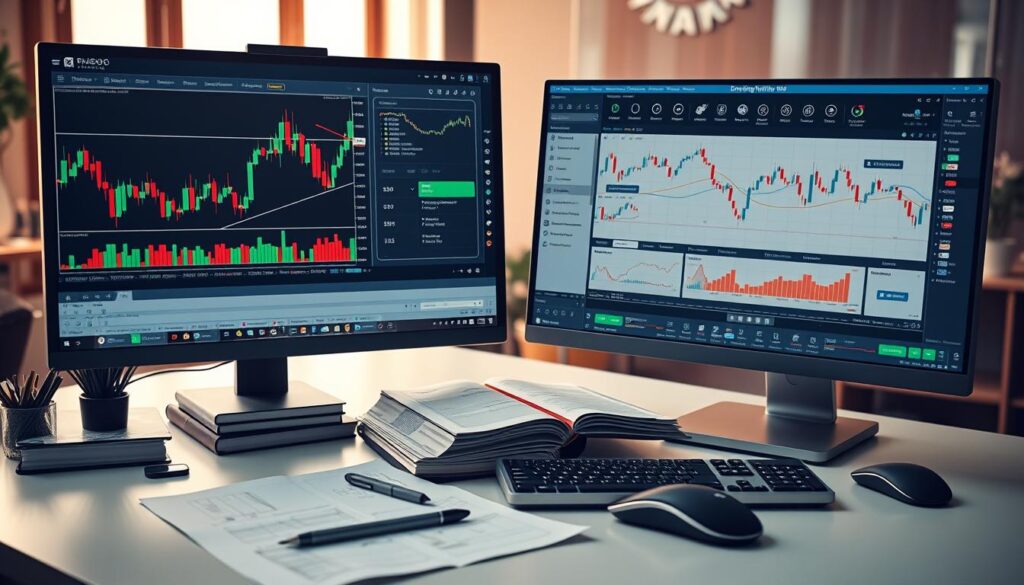
Feature sets represent the fundamental distinction between competing trading technologies. Each platform excels in specific areas that cater to different trader profiles.
Advanced Charting and Technical Analysis Tools
One platform establishes itself as the clear leader for visual market analysis. It offers clean, responsive HTML5 charts accessible from any device without software installation.
Traders benefit from an extensive library of drawing tools and pattern recognition features. The intuitive interface makes sophisticated technical analysis accessible to all experience levels.
Automation Capabilities and Expert Advisors
The competing platform was specifically engineered for algorithmic trading strategies. Its powerful programming language enables creation of sophisticated automated systems.
Traders can test their strategies against years of historical data using professional-grade backtesting tools. This robust automation ecosystem supports complex trading approaches without additional middleware.
metatrader 5 vs tradingview: Performance, Execution, and User Experience

The real-world effectiveness of a trading platform hinges on its execution capabilities and user interface design. These factors determine how efficiently traders can analyze markets and place orders.
Speed and reliability separate professional tools from basic applications. Traders need responsive systems that support their strategies without delays.
Order Execution and Broker Integration
One platform connects directly with over 1,500 brokers worldwide. This extensive network ensures fast order processing and reliable trade execution.
Active traders benefit from millisecond-precision order placement. The architecture supports multiple order types including market, pending, and stop orders.
Advanced risk management protocols require robust execution infrastructure. Professional traders value this performance during volatile market conditions.
User Interface, Customization, and Workflow Efficiency
The competing platform offers a modern, web-based interface that’s intuitive for all experience levels. Its clean design makes navigation straightforward.
Cloud synchronization ensures consistent experience across devices. Charts and watchlists update seamlessly from desktop to mobile.
Customization options appeal to experienced traders who build personalized workflows. Third-party tools can enhance efficiency with automated features.
The choice depends on individual priorities between modern design and execution power. Each platform serves different trader needs effectively.
Social Trading, Community Insights, and Educational Resources

Beyond technical tools, the social ecosystem of a platform shapes trader development. Collaborative features transform individual analysis into collective wisdom.
This dimension distinguishes modern trading environments from traditional isolated approaches. The community aspect provides continuous learning opportunities.
Community-Driven Features and Strategy Sharing
A vibrant social network connects millions of traders worldwide. Users share real-time analysis and trading ideas through interactive charts.
The platform’s publishing system allows detailed strategy explanations with annotations. Community members can discuss, agree, or challenge each perspective.
Following top analysts provides learning opportunities for less experienced traders. A reputation system tracks forecasting accuracy and engagement metrics.
Learning Resources and Market Analysis Tools
Comprehensive educational materials support skill development at all levels. Tutorials range from basic chart reading to advanced programming concepts.
Built-in screeners help identify opportunities across thousands of instruments. Customizable filters track technical patterns and performance characteristics.
This collaborative environment benefits both novice and experienced traders. The community-driven approach exposes users to diverse analytical perspectives.
Comparative Analysis Across Market Coverage and Customization
Financial platform selection often hinges on two critical factors: market coverage depth and customization flexibility. These elements determine how effectively traders can access diverse instruments and tailor their analytical environment.
Market Instruments: Forex, Stocks, and Beyond
One platform excels with extensive forex trading capabilities across major, minor, and exotic pairs. It also supports global stock indices, individual equities, commodities, and cryptocurrencies. This multi-asset approach serves diverse trading strategies.
The competing solution offers universal charting for virtually all financial instruments worldwide. Traders can analyze stocks, forex pairs, cryptocurrencies, and more regardless of broker access. This makes it ideal for comprehensive market research.
Custom Indicators, Scripts, and Third-Party Add-Ons
Customization ecosystems differ significantly between platforms. One features an established marketplace with thousands of indicators and automated tools. Quality varies, requiring careful evaluation before use.
The other platform provides a user-friendly scripting environment with rapidly growing community contributions. Its library offers high-quality indicators with transparent code. This encourages both creation and modification by traders.
Both platforms empower traders with extensive customization options. The choice depends on technical skill level and specific analytical needs.
Affiliate and Market Impact Insights

The commercial success of trading platforms can be measured through their affiliate marketing performance. These metrics reveal user preferences and market positioning beyond technical features.
Affiliate Program Metrics and Revenue Opportunities
Affiliate data shows distinct patterns between platforms. One solution achieves 8-12% conversion rates with higher payouts per client. This reflects serious traders generating substantial trading volumes.
The competing platform shows 12-18% conversion rates due to its freemium model. Lower entry barriers attract more users, though commissions are smaller. Retention metrics also differ significantly between user bases.
Platform Adoption and Global Broker Partnerships
Broker integration density heavily favors the established industry leader. Over 1,500 brokers worldwide support this platform. Its proven reliability attracts experienced traders.
The newer platform partners with over 100 brokers despite having 50 million users. Many employ it for research while executing trades elsewhere. Geographic adoption patterns show regional preferences.
Final Thoughts on Choosing Your Ideal Trading Platform
The journey to finding your ideal trading environment ends with honest self-assessment. There is no universal “best” platform—only the right choice for your specific needs and trading style.
TradingView excels for traders who prioritize superior charting, an intuitive interface, and social analysis tools. Its visual approach suits discretionary traders conducting deep market analysis.
Meanwhile, MetaTrader 5 remains essential for those requiring robust automation and direct trade execution. Experienced traders often combine both platforms, using one for chart view and the other for placing trades.
The most effective approach involves testing both platforms with demo accounts. This hands-on information reveals which interface and trading features align with your workflow. Your perfect platform choice depends on how you process market data and execute strategies.